
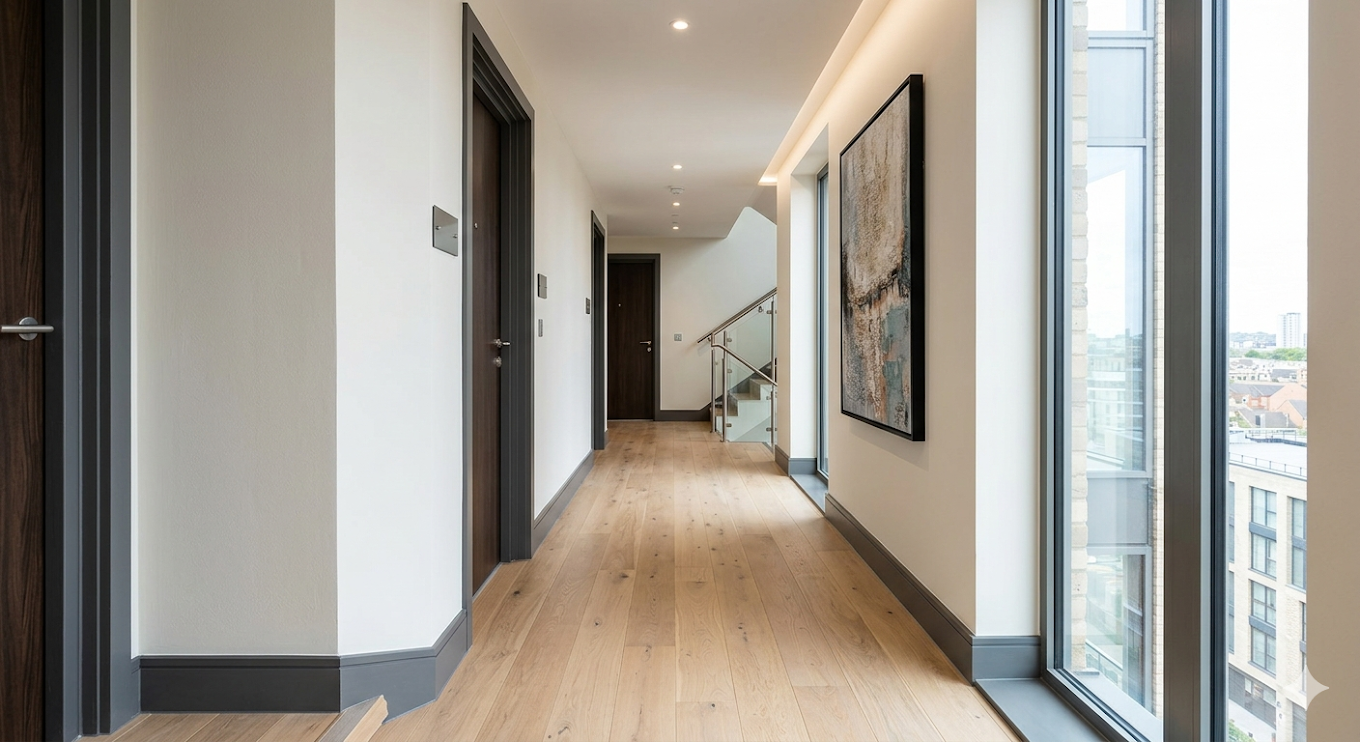
Of all the improvements a homeowner can make, quality decorating is consistently one of the most cost-effective ways to add genuine, visible value to a property. It doesn’t require the disruption or expense of a structural renovation, and unlike many other improvements, its effect is immediate and obvious to anyone who walks through the door — which matters a great deal whether you’re preparing to sell, let, or simply want your home to feel its best.
First Impressions Genuinely Matter
Whether it’s a prospective buyer viewing a Victorian terrace near High Barnet, a tenant looking round a flat close to Edgware, or simply a guest visiting your home, the impression formed in the first few moments has a disproportionate effect on how the whole property is perceived. A freshly painted hallway and staircase — often the very first thing anyone sees on entering — sets a tone that carries through the rest of the viewing or visit, even if other rooms are decorated to the same standard.
Fresh Paint Signals a Well-Maintained Property
Beyond the visual appeal, well-executed decorating sends a subtle but powerful signal: that a property has been looked after. Buyers and tenants alike tend to read a fresh, professionally finished paint job as evidence that other, less visible aspects of the property — plumbing, electrics, general upkeep — have probably been maintained with similar care, even when that’s not something they can directly verify during a viewing.
Neutral, Considered Colours Appeal More Broadly
When decorating with resale or rental value specifically in mind, it’s usually worth leaning toward warmer, more universally appealing neutrals rather than highly personal or trend-led colour choices. This doesn’t mean every wall needs to be plain white — a well-chosen, considered palette throughout a property, whether a period terrace around New Barnet or a modern flat near Colindale, tends to appeal to a broader range of buyers or tenants than bold, highly individual choices that some viewers will love and others will actively dislike.
Correcting Wear Before It’s Noticed
Small signs of wear — scuffed skirting boards, a faded patch on a wall where furniture has stood, marks around light switches — are easy to overlook when you live somewhere every day, but they’re exactly the kind of detail a prospective buyer or tenant notices immediately. Addressing this wear properly before putting a property on the market, or before a new tenant moves in, removes a source of unconscious hesitation that can otherwise chip away at how favourably a property is perceived.
Exterior Presentation Sets Expectations Before Anyone Steps Inside
Kerb appeal genuinely matters, particularly for the terraced and semi-detached housing common throughout Barnet, where a property’s frontage is often visible from the street well before anyone arranges a viewing. A well-maintained, freshly painted front door, clean render, and tidy exterior woodwork all contribute to a sense of quality and care that carries through into how favourably the interior is then judged.
Communal Areas Matter for Flats and Apartment Blocks
For anyone with a property in one of the apartment blocks or converted period buildings around Finchley, Mill Hill East or Hendon, it’s worth remembering that communal hallways and entrances form part of the overall impression too, even though they’re technically shared space. A well-maintained communal area reflects positively on the whole building and, by extension, on individual flats within it — something worth raising with a residents’ association or managing agent if communal decorating has been neglected.
Quality Over Quantity of Rooms Decorated
If budget or time is limited, it’s worth prioritising the rooms and areas that have the greatest impact on overall impression rather than trying to spread a smaller budget thinly across an entire property. Hallways, kitchens, living rooms and any front-facing rooms tend to matter more to overall perceived value than a spare room or box room that sees less use and less visibility.
The Cost-to-Value Ratio Is Genuinely Favourable
Compared to most other home improvements — a new kitchen, an extension, replacement windows — professional decorating carries a relatively modest cost while delivering a visible, immediate improvement that most viewers or visitors will notice within moments of walking through the door. This is precisely why it’s one of the most commonly recommended improvements ahead of putting a property on the market, whether that’s a period conversion near Hampstead Garden Suburb or a more modest terrace near Whetstone.
Getting the Standard Right
The value genuinely comes from the quality of the finish, not simply from paint having been applied. A rushed, poorly prepared job can actually do more harm than good, drawing attention to cracks, uneven coverage or patchy colour that a careful buyer or tenant will notice just as readily as they’d notice a genuinely well-finished room. Investing in proper preparation and a considered, professional finish is what turns decorating from a cosmetic exercise into a genuine value-adding improvement.
Well-executed decorating is one of the few home improvements that pays for itself almost immediately in how a property is perceived, whether you’re selling, letting, or simply want your home to feel its best day to day.